

THROBBING GRISTLE BOOTLEGS
A text originally written for TQ issue 67

The following is a small text I contributed to TQ, as part of a wider piece where people who had released copies of Trond Jervell’s FEELIN’ were invited to answer four random interrogative words about bootlegs & bootlegging, in 500 words or less. I chose to look at Throbbing Gristle and the question of canon; I can’t remember what my interrogative words were. It’s a very top-level overview, but hopefully points the reader in some interesting directions. Here’s the text as it appears in TQ67, including the intro they wrote and a slightly inconsistent attitude in the formatting to proper nouns. I do recommend picking up a physical copy of the magazine if you can. I’ve put YouTube listening links in wherever possible.
No audience underground print only publications have higher res images challenge.
George Rayner-Law is a sound worker from South London. He co-operates Brachliegen Tapes and is one half of the group Degradation. He took the opportunity to expound on the work of Throbbing Gristle:
TG are almost impossible to get a handle on, event at the current distance from either of their phases of activity. Better understood as an art unit than a musical group, TG are inseparable conceptually from the fully DIY label they operated, Industrial Records. The vast majority of TG’s live performances were released on Industrial Records at the time of the group’s original operation between 1976-1981, and their studio resources were so limited that the group generally scavenged their master tapes from BBC radio studio bins.
So, perhaps it should be simple: an official TG release is anything released on Industrial, or, an even tighter canon: anything reissued and canonised by Fetish, and later by Mute.
But this dividing line is very faint; TG’s first album is only available as a bootleg of a private cassette, despite being far more compelling than 20 Jazz Funk Greats. I think to understand the troubled question of canon, the lens of performance art is key. The power of TG bootlegs lie in their pitch and varied nature as documentation of art practice that sits outside the ‘catalogue raisonné’ more than ‘improper’ musical releases. There is no hidden material, no cutting room floor, just a fixed body of work organised and reorganised.
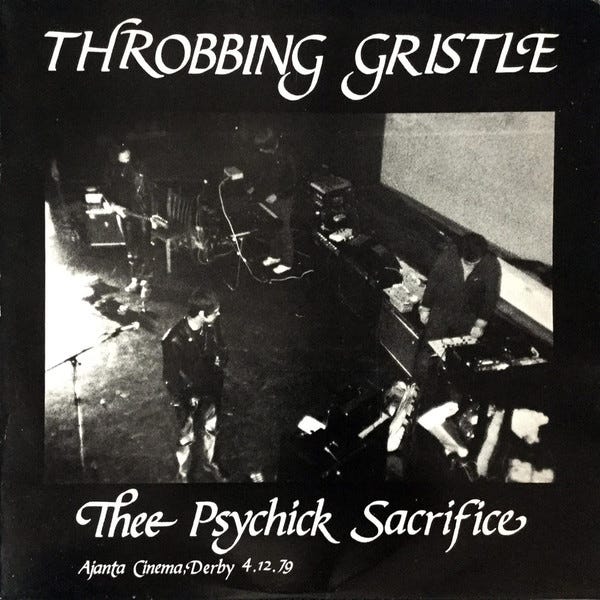
I’ve not featured this in the article but it’s also a great bootleg - and a double LP so a full set.
Almost exclusively, TG bootlegs were released after the 1981 ‘Mission Termination’, and prior to the 2000s reactivation. To extend our art metaphor, we must consider the TG market during this period. Clearly there was a greater demand for the group’s material than was available. semi-official releases, such as Assume Power Focus and Special Treatment also served a market while presumably generating some revenue for the members. But these semi-official releases also function as a form of retrospective processing, as a series of interrogative lenses on what the body of work was, and how to make sense of it. Cosey’s liner notes to Special Treatment make the 1978 performance it is edited from, and that wider period, sound like a semi-recalled dream.
With bootlegging, questions of authorship are fascinating, and with TG these questions are sometimes more rewarding than the material itself. In Throbbing Gristle bootlegs, there is a lot more to explore beyond mere object fetishism or collector impulse.
Here is a quick list of my personal picks of the Throbbing Gristle bootlegs - all should be available online:
Funeral In Berlin - the best TG record there is, official or bootleg. An LP of the less rhythmic tracks from their two Berlin live performances.
Rafters: TG Psychic Rally - Maybe the tightest TG live, the 12” version of Discipline emerging from the mist at the end.
Dimensia In Excelsis - the night before Mission Of Dead Souls, and much much grubbier, closer to ‘76 TG.
Industrial Studios 8 Track 18 March 1979 - Exactly what is says on the tin. A lot harsher than CD1, a lot more meditative than 20 Jazz Funk Greats. my go-to TG studio recording.
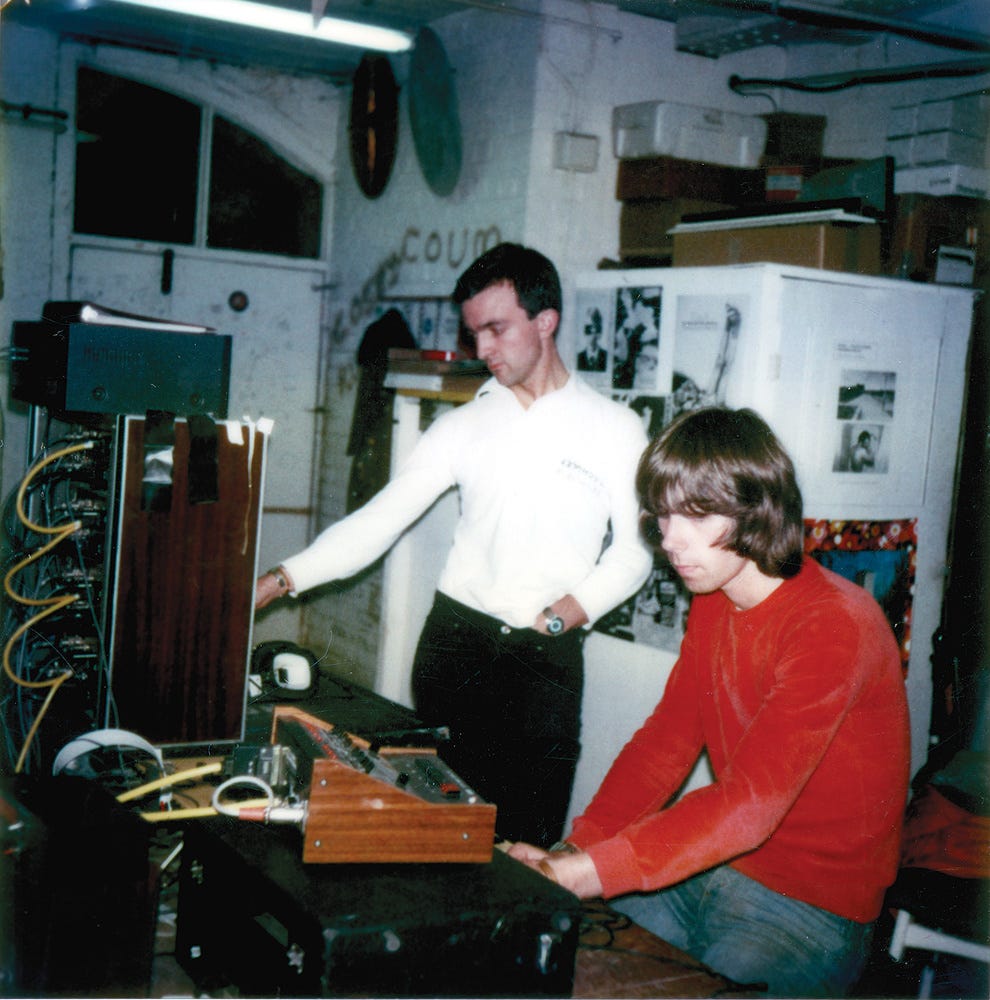
Sleazy and Chris having a Sunday afternoon fiddle circa 1980.